Phigros
- 4.5
- Rating
- 1.00M
- Installs
- Free
- Price

 Analysis by App-foxy
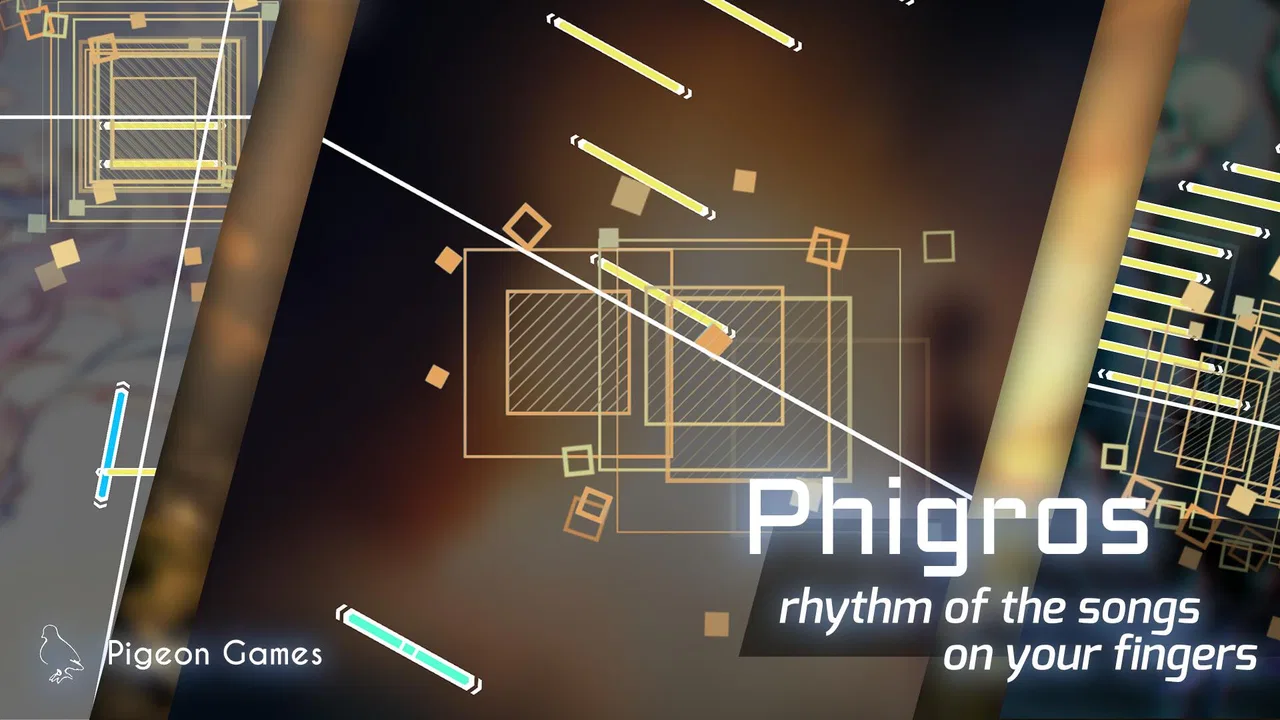
When I want a rhythm game that asks me to pay attention rather than simply tap a repeating lane, Phigros is one of the first names I consider. It is a free music game from PigeonGames, and its central appeal is easy to understand: the notes and the play area do not behave like a fixed piano keyboard. That makes every song feel more like a small visual performance than a routine reflex test.
I approached it as a decision rather than an automatic recommendation. A rhythm game can be attractive because of its music, its challenge, its presentation, or the convenience of playing for a few minutes. Phigros is strongest when you enjoy learning an unusual control language and gradually turning confusion into timing. It is less suitable if you want a relaxed background game, a traditional falling-note layout, or an experience that explains every idea immediately.
What I would consider before installing
The first question is whether you enjoy rhythm games that make you adapt to the screen. In many familiar music games, notes travel toward a stable judgment line, so your hands learn a consistent pattern. Here, the visual movement is more expressive. The judgment line can shift, and notes may arrive from directions that make you read the whole screen instead of staring at one narrow strip.
You May Also Like

 Blood Strike: 2.5 Anniversary
Blood Strike’s Loadouts Turn Every Drop Into a Tactical Gamble
A close look at Blood Strike’s custom loadouts: how fast access to signature weapons reshapes its battle royale rhythm, rewards preparation, and narrows the gap between fights.

 Pandora - Music & Podcasts
Pandora’s Music Is Easy to Start, but Harder to Recover
Pandora’s strength is its low-effort path from a seed to a station. Its weak spot is how much confidence it asks you to place in connection, setup, and quiet recovery.

 8 Ball Pool
 Is Built on Rivalries, Rematches, and Routine
A close look at the rivalries, rematches, shared routines, and unanswered safety questions that turn a quick pool match into a persistent mobile community.

 Samsung Music
’s Quiet Strength Is Playing What You Already Own
Its reach comes less from spectacle than from dependable access to a personal library. That simplicity is both the app’s strongest retention engine and its ceiling.

 AccuWeather: Weather Radar
AccuWeather Review: A Quick, Clear Forecast for Everyday Decisions
For everyday plans, the best forecast is the one you can understand quickly. AccuWeather makes rain timing, radar, and local conditions easy to act on, with a few trade-offs.

 Hill Climb Racing
Why Hill Climb Racing Still Turns Crashes Into One More Run
A tiny car, a bumpy hill and one more upgrade: Hill Climb Racing keeps resurfacing because its simple chaos makes every near-miss feel personal.
More From Our News Desk



That design gives Phigros its personality, but it also changes the learning curve. I found that success depends less on memorizing one hand position and more on recognizing motion, spacing, and timing together. If you already play demanding rhythm games, this difference can feel refreshing. If you are new to the genre, the early sessions may feel less like learning a song and more like learning a new alphabet.
The game sits in the music category and is rated for Everyone, which makes it approachable from a content standpoint. That does not mean every chart is easy, though. The age rating describes suitability, not the level of concentration required. A younger or inexperienced player may understand the controls quickly but still need plenty of practice before difficult patterns become comfortable.
I also look at whether a game respects short sessions. Phigros works well when I have a few spare minutes and want to play one chart, but its structure also rewards longer practice. A quick attempt can reveal a problem in my timing; several attempts let me isolate that problem and build consistency. It is therefore a good fit for commuters, students taking a break, or anyone who enjoys a focused challenge rather than passive entertainment.
Why the unusual playfield matters
The moving judgment line is not just a visual trick. It changes how I read a chart. I have to watch where the line is going, predict when notes will intersect with it, and keep my fingers ready for taps, holds, or directional gestures. That combination creates moments where the music and animation seem to pull together, especially when a chart uses movement to emphasize a change in the song.
This is also where the game can expose weaknesses in my habits. In a conventional lane-based title, I can sometimes rely on peripheral vision or muscle memory. Phigros makes that strategy less reliable. I need to look ahead, keep my attention broad, and avoid reacting only when a note is already at the judgment point. The result feels demanding in a satisfying way, because improvement comes from better reading rather than simply tapping faster.
One practical tip helped me more than I expected: I learned to watch the path of the judgment line first and the individual notes second. When I focused on every object separately, busy sections became visual noise. When I treated the line as the main rhythm guide, the patterns became easier to organize. This is a small change, but it is the kind of adjustment that makes the game feel fairer without making it easier.
Another useful habit is to resist increasing the challenge immediately after unlocking or reaching a new song. I get more from repeating a chart at a comfortable level while paying attention to missed inputs. If I miss near the same transition each time, the issue may be anticipation rather than speed. That distinction matters: practicing faster hands will not fix a timing mistake caused by reading the line too late.
How the music experience develops
Phigros is not merely a collection of songs with a score attached. The visual charting gives the music a physical shape. A steady passage can feel controlled and symmetrical, while a more dramatic section may fill the screen with movement. I enjoy that connection because it makes replaying a familiar track worthwhile; I am not only chasing a higher result, but also learning how the chart interprets the composition.
The game’s free price is important in this category. It lowers the barrier for someone who is curious about unconventional rhythm design and does not want to commit money before knowing whether the controls suit them. I can recommend trying it to a friend without asking that person to make a purchase decision first. The trade-off is that a free game can feel more like a long-term hobby than a single polished session, so patience is part of the bargain.
The community response suggests that the approach has found a substantial audience. On the store, it holds a 4.6 average from around 35 thousand ratings, with more than a million installs. Those figures are not a guarantee that every player will enjoy it, but they do match my impression that the game has a clear identity rather than being an anonymous music title. It knows what kind of rhythm experience it wants to provide.
I would not use the rating as a substitute for personal testing. Players who prefer simple controls can reasonably find the presentation overwhelming, while experienced rhythm fans may appreciate exactly that pressure. The same feature can be a strength or a barrier depending on whether you want familiarity. In my case, the distinctive layout is the reason I return, not an obstacle I tolerate.
Small-session use and focused practice
A realistic way I use it is during a short break when I want something more engaging than scrolling. I choose a song I already recognize, play one attempt without worrying about the result, then decide whether the difficult section deserves another try. That routine keeps the game from becoming an exhausting score chase. It also gives each session a clear purpose: warm up, study a chart, or test whether a technique has improved.
For more deliberate practice, I separate reading problems from execution problems. If I cannot tell where the next notes are going, I slow down mentally and concentrate on the moving line. If I can read the pattern but repeatedly release or tap late, I focus on hand movement and timing. This approach is more productive than replaying the same song while hoping that repetition alone will solve everything.
Playing on a phone also affects the experience. A larger screen can make busy patterns easier to read, while a smaller display may feel more convenient but leave less visual space for tracking movement. I would choose the device on which I can see the entire playfield comfortably, not necessarily the one I use most often. Clean screen visibility matters more here than it does in a simple lane game.
Touch accuracy matters as well. Before judging a chart, I make sure my fingers are not covering the area where I need to see the next movement. I also avoid playing when my grip forces me to stretch awkwardly across the screen. These sound like minor details, but a game built around moving targets can make poor posture or a cramped hold feel like a difficulty spike.
Where Phigros wins against familiar rhythm games
Compared with traditional falling-note games, Phigros wins on visual variety and the feeling that charts are actively staging the music. A fixed-lane alternative may be easier to read at first and better for players who enjoy building speed through a stable pattern. Phigros offers something different: it turns reading the screen into part of the performance.
It also has an advantage for players who become bored by predictable input layouts. Once I understand a conventional lane system, many songs can begin to feel like variations on the same physical task. Here, the changing line and chart movement keep me alert. Even when my fingers are performing familiar actions, my eyes still need to interpret what is happening.
The game is especially appealing if you like gradual mastery. A song that initially looks chaotic can become understandable after I identify its structure. I may learn that a section alternates between quick taps and sustained input, or that a visual sweep signals how I should prepare my hand. That process gives practice a real sense of discovery instead of making it feel like a simple endurance test.
Its strongest advantage is therefore not raw difficulty. Plenty of rhythm games can be difficult. Phigros stands out because the difficulty is tied to presentation and spatial reading. The challenge feels authored around the music, and that makes successful play feel more personal. I am not only reacting quickly; I am learning how this particular chart communicates.
When a different category may fit better
I would point a friend toward a more conventional rhythm game if that person wants immediate clarity. Fixed lanes, familiar note travel, and predictable gestures are often better for casual play, especially when the goal is to relax rather than concentrate. Phigros can become relaxing after its language clicks, but it is not the easiest choice for a first five-minute session.
A music-streaming app is also a better option if the main goal is listening. Phigros asks for active attention, and its soundtrack is experienced through gameplay rather than passive playback. I would not open it while doing homework, cooking, or trying to fall asleep. It is a game first, and the music works best when my hands and eyes are involved.
Players who dislike repetition should think carefully before choosing it. Rhythm improvement comes from replaying charts, and the same section may need many attempts before it feels natural. That is not a flaw in the design, but it can feel like friction if you expect constant novelty. The game rewards persistence more than casual sampling of a large number of songs.
There is also a difference between challenge and accessibility. The Everyone rating makes the content broadly approachable, yet the visual density and timing demands may still be uncomfortable for someone sensitive to fast movement or prone to fatigue during concentrated play. I would take regular breaks and avoid treating every missed note as a reason to continue immediately. A short pause often helps more than another frustrated attempt.
What switching to it really involves
Moving from a lane-based rhythm game to Phigros is not simply installing another title and transferring the same habits. I had to retrain my eyes to follow the playfield, not just wait for notes to reach a fixed destination. I also had to accept that early mistakes were often reading mistakes. That adjustment is the real cost of switching.
The good news is that the new skill transfers within the game. Once I became comfortable tracking the line, later charts felt less mysterious. The initial effort did not disappear; it became a foundation. This makes Phigros a better long-term choice for someone who enjoys learning a system than for someone who wants instant competence.
I would start with songs that let me observe the layout without overwhelming me. Rather than chasing the hardest available chart, I would choose a piece whose patterns are easy to distinguish and use it to practice looking ahead. I would also keep the sound at a level where the beat is clear but not tiring. Timing is easier to judge when the audio remains comfortable throughout repeated attempts.
Another trade-off is attention. Because the line can move in unexpected ways, I cannot play effectively while dividing my focus between the game and another task. That makes it less convenient than a simple casual app, but it also gives the sessions more value. When I finish, I feel that I have actually done something rather than merely filled time.
Practical details for a first session
PigeonGames has continued to maintain the game, and the current version is 3.19.2. It runs on Android 8.0 or later, so I would check the operating system before planning to install it on an older device. The technical requirement is only one part of the decision, though; screen size, touch response, and personal comfort will shape the experience just as much.
Because the game is free, I can test the core experience without paying up front. That makes my recommendation simple: install it, try several charts, and judge whether the moving playfield feels intriguing or tiring. If the unusual layout makes me curious even when I fail, that is a strong sign I will enjoy it. If I spend the session wishing for fixed lanes, another rhythm game will probably be a better use of my time.
I would also keep expectations realistic about progress. A good result may require more than memorizing the song’s melody. Visual cues, hand placement, and the timing of releases all matter. I find it useful to treat a failed run as information: did I lose track of the line, react late, or hold my finger in the wrong place? Naming the problem turns frustration into a practical next step.
My recommendation
I recommend Phigros to players who want a free, distinctive rhythm game and are willing to learn a moving visual language. Its best qualities appear when the music, chart animation, and hand movement begin to agree. That moment is genuinely satisfying, and it gives the game a character that fixed-lane alternatives do not always provide.
I would skip it if you want a background listening tool, a very gentle first rhythm game, or a control scheme that stays consistent from song to song. I would also avoid judging it after one hurried attempt. The unusual design needs a little time, and the first impression can be more confusing than the later experience.
For me, the final decision comes down to the kind of challenge I want. If I want predictable repetition, I choose a conventional music game. If I want to study how sound can become movement across an entire screen, I choose Phigros. Its free entry, Everyone rating, and large player base make trying it easy, but its real value is more specific: it rewards the player who enjoys turning visual confusion into musical control.
After its release on February 17, 2020, it has grown into a recognizable choice in mobile music gaming, and I can see why. It does not try to be the simplest option. Instead, it asks me to look differently, practice deliberately, and accept that mastery will arrive gradually. For the right player, that is not a warning; it is the reason to start.
FAQs for Phigros
01What is Phigros and how does it work?
Phigros is a dynamic rhythm game that combines visually stunning graphics with engaging music tracks. Players must tap, swipe, and hold notes as they appear on the screen in time with the music. The game offers a unique freeform note system where notes can move and change direction, offering a fresh challenge to rhythm game enthusiasts.
02Is Phigros available for both Android and iOS devices?
Yes, Phigros is available for download on both Android and iOS platforms. You can find it on the Google Play Store for Android devices and the Apple App Store for iOS devices. Ensure your device meets the necessary system requirements for optimal performance.
03Does Phigros require an internet connection to play?
Phigros primarily operates offline, allowing you to enjoy the game without an internet connection. However, certain features like updates, leaderboards, or additional content downloads may require an internet connection. It's recommended to check for updates regularly to access new tracks and features.
04Are there in-app purchases in Phigros?
Phigros is free to play, but it does offer in-app purchases. These purchases may include additional music packs, cosmetic items, or other features that enhance the gaming experience. While the core game is fully playable without spending money, these purchases can provide additional content for dedicated players.
05How challenging is Phigros for new players?
Phigros caters to both beginners and experienced rhythm game players. It features multiple difficulty levels for each song, allowing players to start at an easier level and work their way up as they improve. The unique note system may take some getting used to, but with practice, players will find it rewarding.
Pros
- Unique rhythm game with no fixed note lanes.
- Visually stunning with dynamic backgrounds.
- Diverse soundtrack featuring various genres.
- Regular updates with new content and features.
- No energy system; play as much as you want.
Cons
- High difficulty curve for beginners.
- Requires constant internet connection.
- Limited customization options for controls.
- Occasional lag on older devices.
- No multiplayer or social features.

Phigros
Gallery